

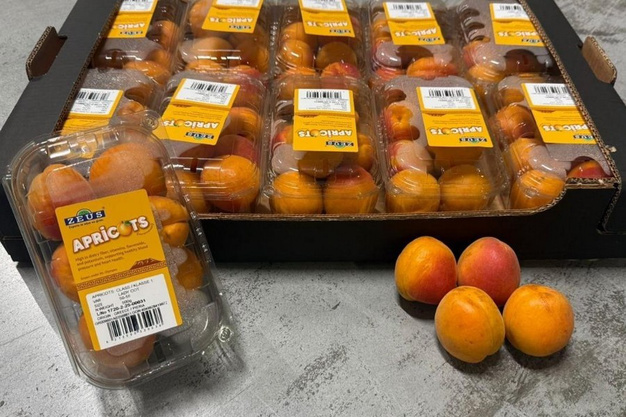
Thanks to good weather, there should be more Greek apricots harvested this year, says Christina Manossis, general manager for Greek kiwi exporter Zeus: “For apricots, we expect an increase in volume this year, of almost 20 per cent. The cultivation period has been positive, with relatively good weather, which means that thankfully, we’ve had no major issues. Our apricots are mainly exported to Northern and Western European countries. Our goal is to target more retailers this year, in different markets in Europe. We plan ahead by creating new partnerships that will absorb our production in the coming years.
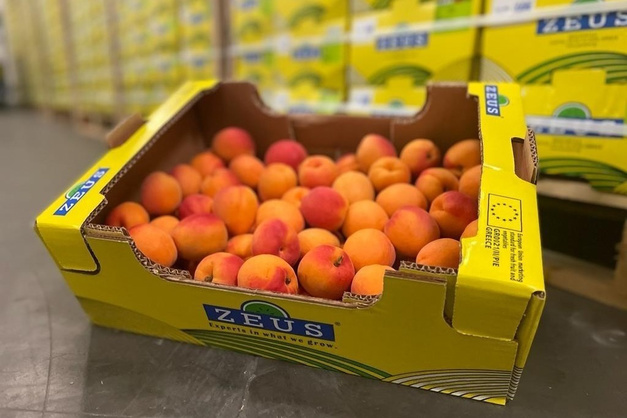
With this in mind, Manossis is optimistic about having a strong apricot season this year. “Given the strong volumes anticipated this year, we plan to maintain a consistent market presence from June through the end of August. Our brand is widely recognized for its association with premium-quality produce, and we remain committed to supplying only the finest apricots throughout the season.
Unfortunately, the Greek kiwi season was not as positive as the apricot season might be, Manossis explains: “We just concluded the kiwi season a couple of weeks ago. No season is good when fruit is missing. It has been a number of years now that we have witnessed the effects of climate change. Despite favorable prices and returns, this cannot be considered a good season. The simple fact is that we did not have sufficient volumes to serve our markets properly, and that, in itself, constitutes a failure. Climate change has prompted us to focus on varieties that require fewer chilling hours, such as yellow kiwifruit and grape varieties that are better adapted to our microclimate.
Climate change is the biggest challenge facing our industry and will remain a key issue for many years to come. Our business strategy takes its effects into account, and we’re continuously looking for ways to reduce its impact on our production and operations. Zero Waste to Landfill, EPD measurement in Kiwifruit and grape production, and ESG are some of the steps taken to tackle this crisis. At the same time, climate change is not a challenge that any company or country can solve alone. It requires a collective effort, and everyone must do their part. We’re engaged to assume our responsibility. Yet, this is not enough. Europe is the fastest-warming continent in the world, and the Mediterranean region is especially vulnerable. Higher temperatures, more frequent heatwaves, and longer periods of drought are making farming increasingly difficult and unpredictable. The sooner we take action, the more probable is to effectively protect agriculture,” Manossis concludes.